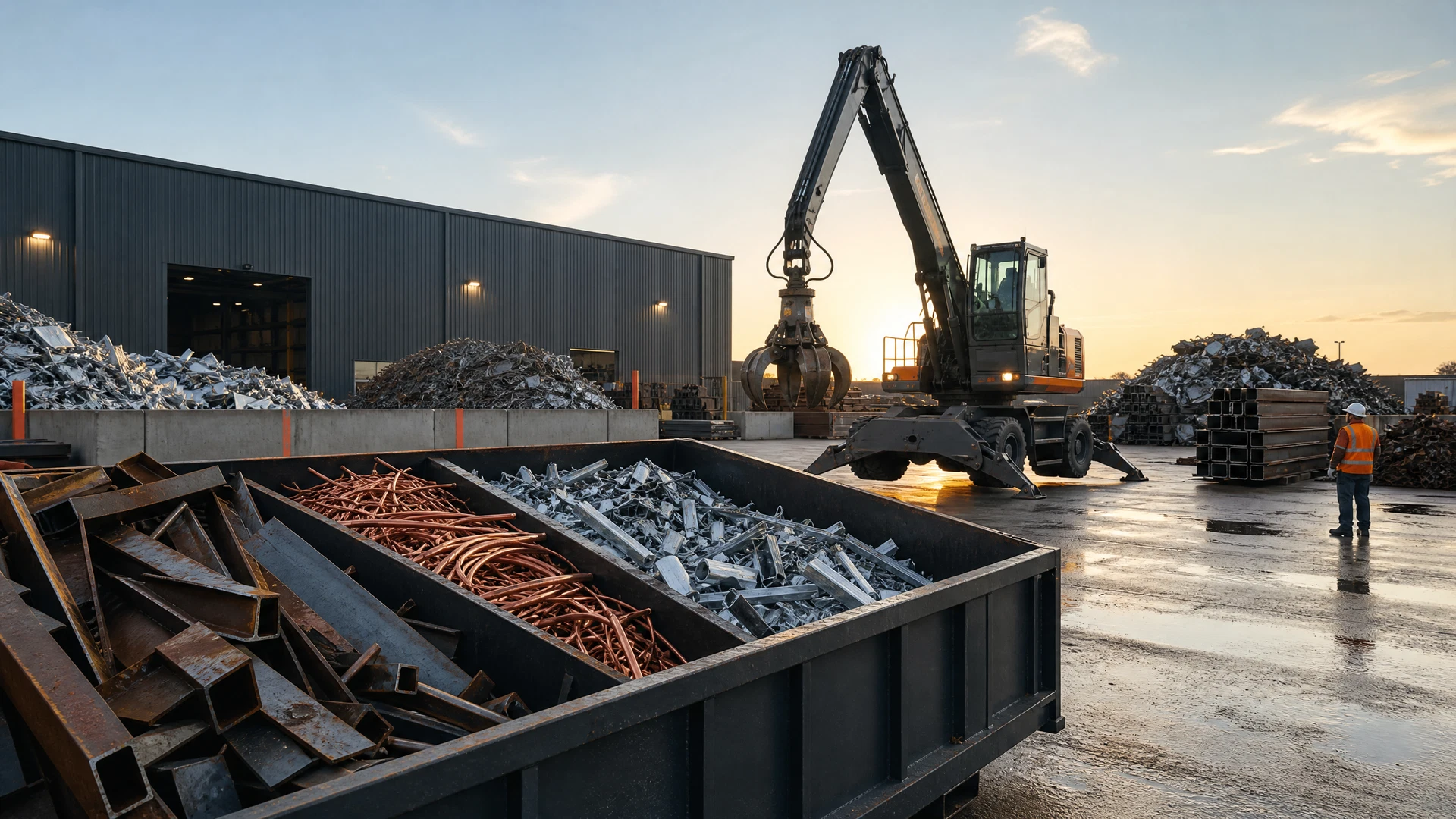
Describe what will enter the container
List the dominant material, secondary metals, likely contamination, maximum piece dimensions, and whether anything can hold fluids or create unsafe protrusions. Do not assume every material belongs in the same container.
Measure volume and generation rate
Estimate how quickly the container may fill and whether the need is one-time, phased, or recurring. Project schedules and production patterns help evaluate delivery, exchange, and removal timing.
Plan container delivery, placement, exchange, and removal
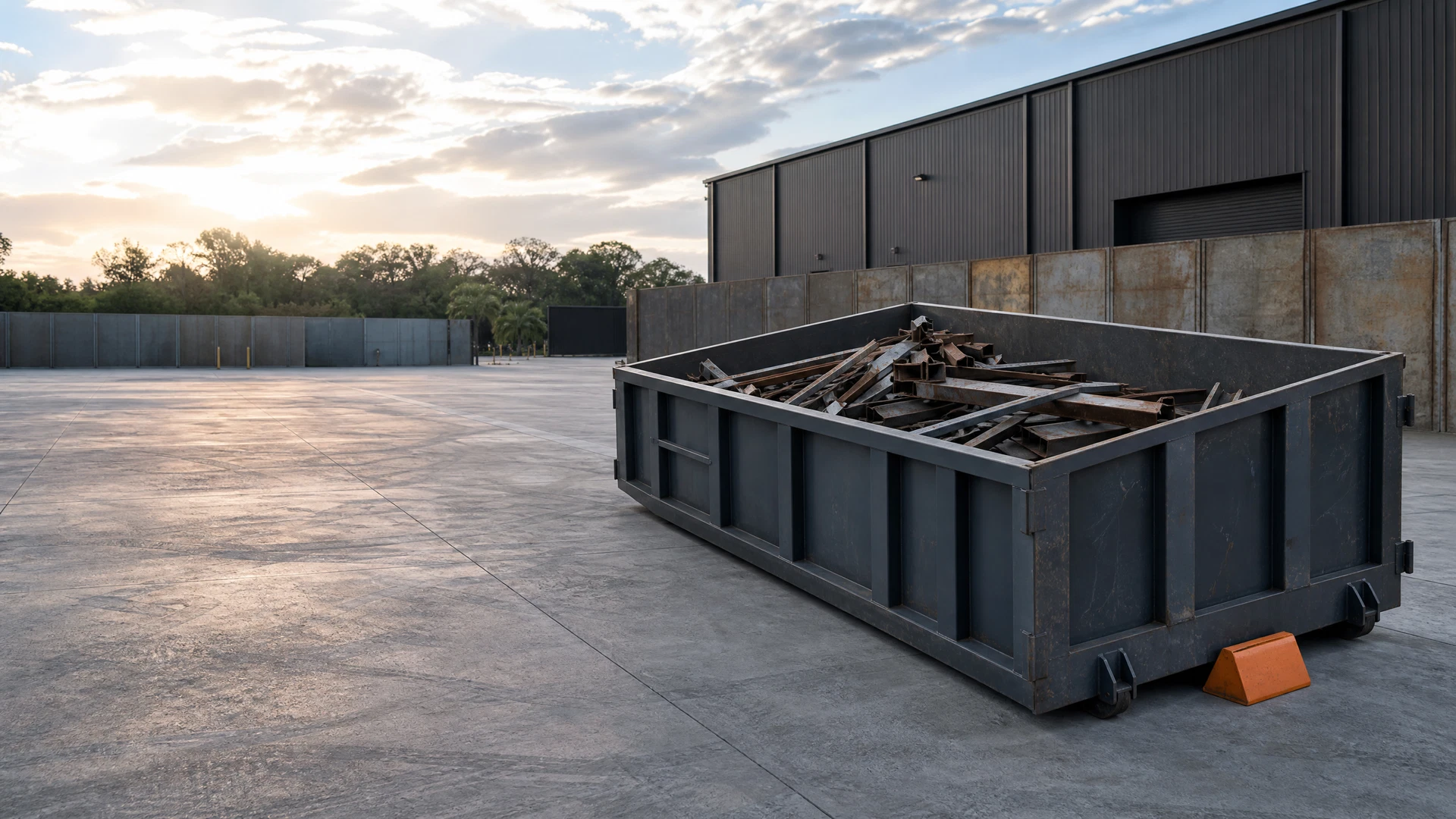
Some people call the requested container delivery a scrap-dumpster drop-off. Provide the proposed placement point, delivery access, expected fill rate, exchange need, removal timing, and the person authorized to coordinate at the site. This website does not represent an unconfirmed public yard where sellers can self-haul and drop off material.
Evaluate the placement area
Provide surface type, slope, drainage, overhead utility and roof clearances, turning room, gate width, traffic conflicts, security rules, and permission for the proposed location. The site remains responsible for evaluating its property and safety requirements.
Clarify loading and weight
Explain the equipment used to load, how oversized pieces will be controlled, and whether dense material may create weight concerns before the container appears full.